
Top 10 Game Development Companies in India (2026 Edition)
Introduction to the India Game Dev 2026 Market
The gaming industry has always been a dynamic and rapidly evolving sector globally, but the trajectory of the India game dev 2026 market is nothing short of revolutionary. As we approach the year 2026, the Indian game development ecosystem has transformed from a burgeoning nascent industry into a global powerhouse. Historically known primarily as an outsourcing destination for global AAA studios, India is now recognized as a prolific creator of original intellectual properties, mobile sensations, and immersive gaming experiences. This shift is driven by a unique confluence of demographic dividends, technological advancements, and shifting cultural paradigms that have embraced gaming not just as a pastime, but as a mainstream entertainment medium and a viable career path.
With a population of over 1.4 billion and a rapidly expanding middle class, the consumer base for gaming in India is unparalleled. However, it is the transition from mere consumption to robust production that defines the India game dev 2026 market. Local studios are harnessing the power of culturally relevant narratives, blending traditional Indian mythology and folklore with cutting-edge gameplay mechanics. This localization strategy has not only captivated the domestic audience but has also garnered significant interest on the international stage. In this comprehensive analysis, we will delve deep into the various facets of the India game dev market as it stands in 2026, exploring the growth drivers, technological innovations, challenges, and the future outlook of this vibrant industry.
The Current Landscape of Game Development in India
By 2026, the landscape of game development in India is characterized by a high degree of diversification and sophistication. Gone are the days when the market was dominated solely by casual mobile games and hyper-casual titles. Today, the ecosystem is a healthy mix of indie developers, mid-tier studios, and large-scale enterprises working across various platforms including PC, consoles, and mobile. Mobile gaming remains the undisputed king in terms of volume and revenue, accounting for a significant majority of the market share. The widespread availability of affordable smartphones and extremely cheap data tariffs have democratized access to gaming, bringing millions of first-time gamers into the fold from tier-2, tier-3 cities, and rural areas.
However, the real story of the India game dev 2026 market lies in the qualitative shift. Indian developers are now producing mid-core and hard-core games that boast intricate storylines, high-fidelity graphics, and complex multiplayer mechanics. Titles developed in India are frequently featuring in the top charts of global app stores. Furthermore, the PC and console segments, though smaller in comparison to mobile, have seen exponential growth. This is fueled by a rising community of hardcore gamers who demand premium experiences and are willing to pay for them. The indie scene in India is particularly vibrant, with small, passionate teams pushing the boundaries of creativity and innovation, often exploring unique art styles and experimental gameplay.
Key Growth Drivers for the 2026 Market
Several interconnected factors have acted as catalysts for the explosive growth of the India game dev 2026 market. Understanding these drivers is crucial for grasping the sheer momentum of the industry.
Smartphone Penetration and 5G Adoption
The bedrock of the Indian gaming revolution is the unprecedented penetration of smartphones. In 2026, smartphone ownership is virtually ubiquitous across the country. More importantly, the hardware capabilities of budget and mid-range smartphones have improved drastically, allowing them to run graphically demanding games smoothly. Coupled with this is the nationwide rollout and widespread adoption of 5G technology. 5G has virtually eliminated latency issues, enabling seamless multiplayer experiences and cloud gaming, which were previously hindered by inconsistent internet connectivity. This technological leap has allowed developers to create more complex, synchronous, and real-time gaming environments without worrying about the end-user's infrastructure limitations.
Rising Disposable Incomes and Youth Demographics
India boasts one of the youngest populations in the world, with a significant percentage of its citizens under the age of 35. This demographic is digitally native, tech-savvy, and highly receptive to interactive entertainment. Furthermore, as the economy continues to grow, there has been a steady rise in disposable incomes. Young Indians are increasingly willing to spend money on in-game purchases, battle passes, and premium game titles. The monetization models have evolved from heavily ad-supported structures to more sustainable free-to-play models with robust microtransaction ecosystems, driven by a consumer base that values digital assets and customized gaming experiences.
Government Initiatives and Support
The Indian government has recognized the immense potential of the Animation, Visual Effects, Gaming, and Comics (AVGC) sector. By 2026, various state and central government initiatives have matured, providing a much-needed fillip to the industry. These initiatives include the establishment of dedicated AVGC centers of excellence, tax incentives for game development studios, and funding programs for promising startups. The government has also actively promoted gaming as a legitimate sport, distinguishing games of skill from games of chance, which has provided regulatory clarity and boosted investor confidence. This supportive policy framework has been instrumental in attracting both domestic and foreign investments into the India game dev 2026 market.
Major Game Development Hubs in India
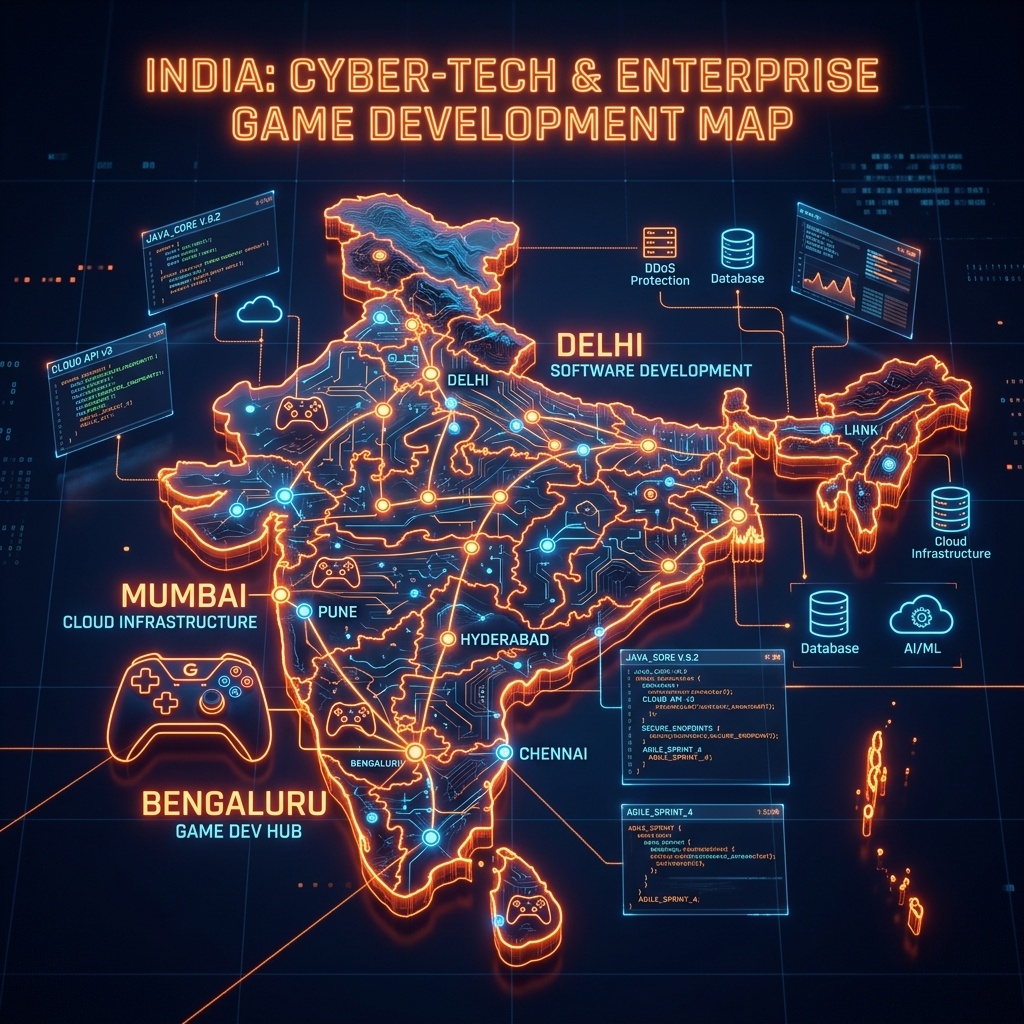
While game development talent is distributed across the country, certain cities have emerged as major hubs, fostering vibrant communities and ecosystems that drive the India game dev 2026 market forward.
Bengaluru, often referred to as the Silicon Valley of India, remains the epicenter of the country's game development industry. It houses a high concentration of established studios, global publishers' regional offices, and a massive pool of technical talent. The city's robust IT infrastructure and startup culture make it a natural breeding ground for gaming innovation. Pune is another significant hub, known historically for its strong IT and outsourcing roots, which have now successfully transitioned into full-fledged game development. The city has a strong presence of both indie developers and large-scale studios focusing on AAA art and game design.
Hyderabad and Chennai are also key players in the ecosystem. Hyderabad has seen massive investments in its AVGC sector, supported by proactive state government policies, and is home to several cutting-edge game development facilities. Chennai, with its rich history in animation and visual effects, contributes heavily to the artistic and cinematic aspects of game creation. Furthermore, cities like Delhi NCR and Mumbai are rapidly catching up, driven by their large consumer bases and the presence of major media and entertainment conglomerates that are increasingly diversifying into gaming.
Esports and Competitive Gaming Boom
The explosion of esports is intrinsically linked to the growth of the India game dev 2026 market. What started as niche community tournaments has blossomed into a multi-million dollar industry with professional leagues, massive prize pools, and celebrity esports athletes. Indian game developers have been quick to capitalize on this trend by creating games specifically designed for competitive play. Titles with balanced mechanics, spectator modes, and built-in tournament features are becoming increasingly common.
The esports boom has also created peripheral industries and career opportunities, such as game casting, tournament organizing, and esports team management. Developers are actively collaborating with esports organizations to build communities around their games, realizing that a strong competitive scene guarantees longevity and sustained revenue. The integration of local languages and culturally relevant content in esports broadcasts has further widened the appeal, bringing competitive gaming to the masses and inspiring a new generation of players to aspire for professional gaming careers, thereby indirectly fueling the demand for higher quality, locally developed competitive games.
Emergence of Web3, AR, and VR Gaming
As we navigate through 2026, the India game dev market is at the forefront of adopting emerging technologies. Web3 gaming, characterized by blockchain integration, NFTs, and play-to-earn models, has seen significant traction. Indian developers are creating decentralized gaming ecosystems where players have true ownership of their in-game assets. While the initial hype has settled into a more mature and sustainable approach, the underlying technology is being utilized to create secure, transparent, and player-centric gaming economies.
Simultaneously, Augmented Reality (AR) and Virtual Reality (VR) gaming have moved beyond gimmicks to offer genuinely immersive experiences. With the hardware becoming more affordable and accessible, Indian studios are developing AR games that blend the physical and digital worlds, often utilizing local landmarks and cultural elements. VR development, though still a premium segment, is growing steadily, particularly in the fields of educational gaming, simulation, and high-end interactive storytelling. The talent pool in India, with its strong background in 3D modeling and software development, is well-equipped to lead the charge in these next-generation gaming paradigms.
Challenges Facing the Indian Game Dev Ecosystem
Despite the phenomenal growth, the India game dev 2026 market is not without its challenges. One of the primary hurdles is the persistent gap in specialized talent. While India produces a massive number of software engineers, there is a relative scarcity of experienced game designers, specialized producers, and senior technical artists who have shipped global AAA titles. This talent crunch often forces studios to invest heavily in training or seek expensive foreign talent for leadership roles.
Another significant challenge is discoverability and user acquisition. With thousands of games being released daily on global app stores, standing out requires substantial marketing budgets, which many indie developers and mid-sized studios lack. The reliance on performance marketing and user acquisition networks is high, and the rising costs of these channels eat heavily into profit margins. Furthermore, while the regulatory environment has improved, there are still occasional ambiguities regarding data privacy, taxation of digital goods, and the classification of certain gaming genres, which can create uncertainty for developers and investors alike. Overcoming these challenges requires a concerted effort from the industry, academia, and the government to foster a more resilient and self-sustaining ecosystem.
Investment and Funding Trends Leading up to 2026
The investment landscape for the India game dev 2026 market has witnessed a paradigm shift. Earlier, funding was predominantly focused on gaming platforms, fantasy sports, and real-money gaming. However, by 2026, there is a marked pivot towards content creation and original IP development. Venture capital firms, both domestic and international, are actively seeking out studios with strong creative visions and scalable business models. There has been a surge in early-stage funding for indie studios, as well as massive growth-stage rounds for established players looking to expand globally.
Moreover, strategic investments and mergers and acquisitions (M&A) have become commonplace. Global gaming giants are aggressively acquiring or partnering with Indian studios to gain a foothold in the subcontinent's massive consumer market and to leverage the local development talent. The rise of gaming-focused VC funds and angel syndicates has also provided specialized mentorship and capital to budding developers. This influx of capital has allowed Indian studios to take bigger risks, invest in higher production values, and compete on a global scale, fundamentally altering the financial dynamics of the industry.
Education and Talent Acquisition
Recognizing the need to bridge the talent gap, the education sector in India has significantly revamped its offerings by 2026. Universities and specialized institutes now offer comprehensive degree programs and diplomas in game design, game art, interactive media, and game programming. These curriculums are often designed in collaboration with industry experts to ensure that students are industry-ready upon graduation.
Furthermore, online learning platforms and bootcamps have proliferated, providing accessible upskilling opportunities for professionals looking to transition into the gaming industry. Talent acquisition strategies have also evolved. Studios are not just looking for technical skills but are increasingly valuing passion for gaming, cultural fit, and creative problem-solving abilities. Hackathons, game jams, and college outreach programs are standard recruitment tools, helping studios identify and nurture young talent early on. The establishment of strong industry-academia partnerships is ensuring a steady pipeline of skilled professionals to sustain the growth of the India game dev 2026 market.
The Future Outlook: What to Expect Beyond 2026
Looking beyond 2026, the future of the India game dev market is exceptionally bright. The industry is poised to move from being a major consumer and emerging producer to becoming a definitive global leader in game development. We can expect to see Indian IPs achieving global blockbuster status, seamlessly blending universal gameplay appeal with unique cultural aesthetics. The integration of Artificial Intelligence (AI) in game development processes—from procedural content generation to intelligent NPC behavior—will further accelerate production cycles and enhance the quality of games produced in India.
Moreover, cross-platform play and the blurring of lines between mobile, PC, and console gaming will present new opportunities for Indian developers to reach wider audiences. As the domestic audience matures and their tastes evolve, there will be a continuous demand for diverse and sophisticated gaming experiences. The ongoing investments in infrastructure, talent, and technology will ensure that the Indian game dev ecosystem remains robust, innovative, and highly competitive on the world stage for decades to come.
Conclusion
In conclusion, the India game dev 2026 market represents a fascinating narrative of rapid evolution and immense potential. Driven by favorable demographics, technological leaps like 5G, and a supportive ecosystem, Indian developers are no longer just participating in the global gaming industry; they are actively shaping its future. While challenges related to specialized talent and discoverability persist, the massive influx of investment and the focus on original IP creation signal a mature and confident industry. As we look ahead, the games developed in India will undoubtedly continue to captivate audiences worldwide, cementing the country's position as a premier hub for interactive entertainment and digital innovation.
Frequently Asked Questions
Nikhil
Founder & CEO @ Gemora Tech
With extensive experience in enterprise software architecture, AI models, and immersive game development, Nikhil leads Gemora Tech in delivering scalable digital transformation solutions for clients worldwide.