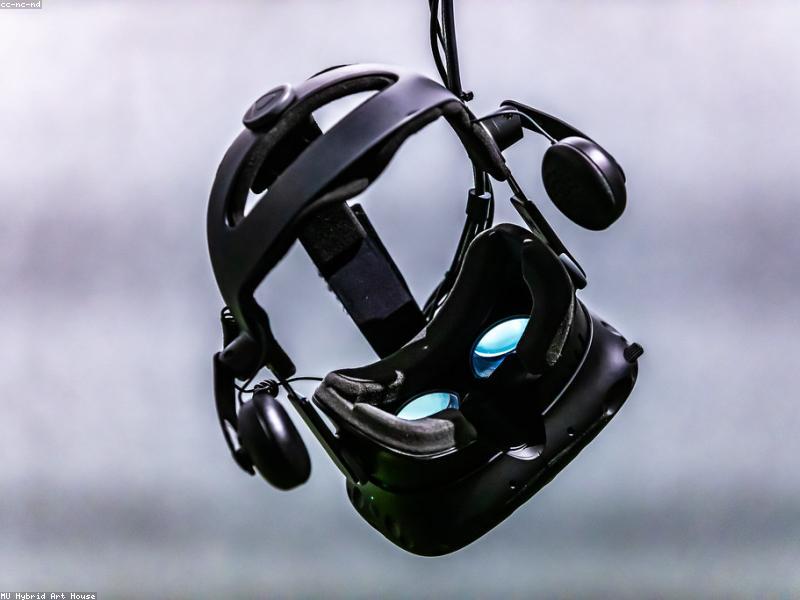
AR/VR Game Development: Transforming Player Experiences

Introduction to AR/VR Game Development
The gaming industry has always been at the forefront of technological innovation, constantly pushing the boundaries of what is possible. In recent years, Augmented Reality (AR) and Virtual Reality (VR) have emerged as revolutionary technologies, fundamentally transforming how players interact with digital environments. AR/VR game development is no longer just a niche market; it is rapidly becoming a central pillar of the interactive entertainment landscape. By seamlessly blending the physical and digital worlds or transporting players to entirely new dimensions, these technologies offer unprecedented levels of immersion and engagement.
As hardware becomes more affordable and accessible, and as development tools grow more sophisticated, a new era of gaming is dawning. This comprehensive guide delves into the intricacies of AR/VR game development, exploring its evolution, underlying technologies, profound impact on player experiences, the challenges developers face, and the future trends that will shape the industry for years to come. Whether you are an aspiring game developer looking to break into the industry or a seasoned professional aiming to transition to immersive technologies, understanding the nuances of AR and VR is absolutely essential.
Furthermore, the convergence of these technologies with other emerging fields, such as artificial intelligence and blockchain, is creating entirely new paradigms for digital ownership, procedural generation, and dynamic storytelling. The economic impact of this shift is already being felt, with massive investments pouring into AR/VR startups and established gaming giants alike allocating significant resources to immersive research and development. The stakes have never been higher, and the potential rewards for creating a truly groundbreaking AR/VR experience are immense.
The Evolution of AR and VR in Gaming
To fully appreciate the current state of AR and VR game development, it is essential to understand their historical trajectories. While the concepts of virtual and augmented environments have existed for decades, it is only recently that the technology has caught up with the vision.
Augmented Reality: Blending Worlds
Augmented Reality enhances the real world by overlaying digital elements onto the user's physical environment. The mainstream breakthrough for AR in gaming was undeniably Pokémon GO. Released in 2016, this mobile phenomenon demonstrated the massive potential of location-based AR gaming, encouraging millions of players to explore their neighborhoods to catch virtual creatures. Since then, AR game development has expanded beyond mobile devices, with the introduction of advanced AR glasses and headsets that promise even more seamless integration of digital content into our daily lives.
Beyond gaming, this technology is being adapted for educational experiences, historical tours, and interactive marketing. In the gaming sphere specifically, AR has evolved from simple overlay mechanics to complex systems that map physical rooms, recognize objects, and allow virtual characters to interact with real-world furniture. The development of ARCore by Google and ARKit by Apple has standardized many of these processes, drastically lowering the barrier to entry for independent developers wanting to experiment with augmented mechanics.
Virtual Reality: Complete Immersion
Virtual Reality, in contrast, aims to completely replace the user's physical environment with a simulated one. Early VR attempts in the 1990s, such as the infamous Virtual Boy, were hindered by bulky hardware, monochromatic low resolution, and significant latency, which often led to motion sickness. However, the advent of modern VR headsets like the Oculus Rift, HTC Vive, and PlayStation VR marked a turning point. These devices offered high-fidelity graphics, precise head tracking, and intuitive motion controllers, finally delivering on the promise of true virtual presence.
Today, standalone headsets like the Meta Quest series have removed the need for tethering to a powerful PC, making VR gaming more accessible than ever before. This untethered freedom has led to the rise of room-scale VR, where players can physically walk around their virtual environments. The shift from stationary, seated experiences to active, full-body movement has redefined genres ranging from first-person shooters to rhythm games, proving that VR is a distinct medium requiring its own unique design language.
Core Technologies Driving AR/VR Game Development
The magic of AR and VR gaming is made possible by a complex ecosystem of hardware and software technologies working in tandem. Developers must navigate these tools to craft compelling experiences.
Hardware Advancements
Hardware is the foundation of AR and VR. For VR, high-resolution displays with fast refresh rates are crucial to maintain immersion and prevent nausea. Advanced optics, such as pancake lenses, are making headsets lighter and more comfortable. Spatial audio provides realistic soundscapes that react to the player's movements. Furthermore, inside-out tracking, which uses cameras mounted on the headset to track movement without external sensors, has simplified setup and enhanced freedom of movement.
In the realm of AR, LiDAR scanners and advanced depth cameras, now common in modern smartphones, allow for highly accurate environmental mapping, enabling digital objects to interact realistically with physical spaces. Eye-tracking technology is also becoming a standard feature in high-end headsets, allowing for foveated rendering and providing developers with new ways to interact with users based on where they are looking. Haptic feedback vests and gloves are in active development, promising to add a profound layer of tactile realism to the immersive experience.
Software and Game Engines
Game engines are the workhorses of AR/VR development. Unity and Unreal Engine dominate the market, offering robust frameworks specifically designed for spatial computing. These engines provide built-in support for rendering stereoscopic images, handling complex physics, and managing user inputs from a variety of controllers. Additionally, specialized SDKs (Software Development Kits) like ARKit and ARCore provide developers with the tools needed to implement motion tracking, environmental understanding, and light estimation for AR applications on mobile devices.
OpenXR, an open standard for AR and VR applications, is also gaining traction, allowing developers to create cross-platform experiences without having to rewrite code for each specific headset. This standardization is critical for the industry's growth, as it prevents fragmentation and ensures that a game developed for one platform can easily be ported to another, maximizing the potential audience for developers and enriching the ecosystem for players.
Impact on Player Experience
The integration of AR and VR into gaming fundamentally alters the player's relationship with the game world, shifting the paradigm from passive observation to active participation.
Unprecedented Immersion and Presence
The most significant impact of AR and VR is the profound sense of presence they create. In a well-designed VR game, the player's brain is tricked into believing they are actually inside the virtual world. This immersion heightens emotional responses; a horror game in VR is infinitely more terrifying than on a flat screen, and the sense of scale when standing next to a virtual dinosaur is awe-inspiring. This level of psychological engagement is simply unattainable through traditional display methods.
AR achieves a different kind of immersion by making the impossible seem real within the player's own living room or backyard. This blurring of lines between reality and fiction creates deeply memorable experiences. When a digital dragon lands on your physical kitchen table, the cognitive dissonance is thrilling, forcing the brain to reconcile the real with the virtual in real-time.
Physical and Spatial Interactions
Traditional gaming relies on abstract button presses to execute actions. AR and VR, however, leverage natural physical movements. Players physically swing a sword, physically duck behind cover, or reach out to grab objects. This spatial interaction not only makes games more intuitive but also introduces a physical element to gameplay, turning gaming into a potentially active and healthy pursuit.
The tactile feedback provided by advanced haptic controllers further enhances this physicality, allowing players to feel the tension of a bowstring or the recoil of a virtual weapon. Games like Beat Saber and Superhot VR have demonstrated that physical exertion can be a core component of a highly addictive gameplay loop, merging exercise with entertainment in a way that traditional fitness regimens often fail to achieve.
Enhanced Social and Multiplayer Experiences
While early VR was often a solitary experience, modern developments are heavily focused on social interaction. Multiplayer VR games allow players to share a virtual space, reading each other's body language and head movements in real-time. This level of non-verbal communication fosters stronger connections and more cooperative gameplay than traditional online multiplayer.
In AR, shared experiences allow multiple users in the same physical location to interact with the same digital objects simultaneously, opening up new possibilities for collaborative puzzle-solving and localized competitive gaming. Virtual concerts and social hubs like VRChat have proven that immersive spaces can serve as compelling venues for human connection, transcending geographical boundaries to bring people together in shared, interactive environments.
Challenges in AR/VR Game Development
Despite the incredible potential, developers face unique hurdles when creating AR and VR games. Overcoming these challenges is essential for the continued growth of the medium.
Technical Limitations and Performance Optimization
Rendering high-fidelity graphics at the frame rates required for VR (typically 90Hz or higher) demands immense computational power. A dropped frame in VR can instantly shatter immersion and cause physical discomfort. Developers must meticulously optimize their games, employing techniques like foveated rendering—which reduces image quality in the user's peripheral vision—to maximize performance.
AR development faces its own technical hurdles, particularly concerning battery drain on mobile devices and the need for robust real-time object recognition and tracking in unpredictable real-world environments. Lighting conditions, reflective surfaces, and featureless walls can all confuse AR tracking algorithms, requiring developers to build resilient systems that gracefully handle tracking failures and keep the illusion intact.
User Comfort and Motion Sickness
Virtual Reality Sickness remains a significant barrier to entry for many players. It occurs when there is a disconnect between the visual motion perceived by the eyes and the physical motion sensed by the inner ear. Developers must employ careful design strategies to mitigate this, such as avoiding forced camera movements, implementing teleportation mechanics instead of smooth locomotion, and providing fixed visual reference points within the virtual environment.
Ensuring comfort is not just a luxury; it is a critical requirement for a successful VR game. Furthermore, developers must consider accessibility, ensuring that their games can be enjoyed by individuals with physical disabilities. Designing for seated experiences, single-handed play, and providing customizable control schemes are essential steps toward building an inclusive immersive gaming ecosystem.
New Design Paradigms and User Interfaces
Traditional UI elements like health bars or minimaps plastered on a screen do not translate well to AR/VR. Information must be integrated seamlessly into the environment. This necessitates a shift towards diegetic UI, where interface elements exist within the game world—such as checking a virtual watch for the time or looking at a physical map held in the player's hand.
Furthermore, level design must account for the player's physical space and movement capabilities, ensuring they do not accidentally collide with real-world furniture or walls. Sound design also takes on a much greater importance, as spatial audio is crucial for directing the player's attention and providing feedback in a 360-degree environment without relying on visual prompts.
Key Trends Shaping the Future of AR/VR Gaming
The AR/VR landscape is highly dynamic, with continuous innovations pushing the medium forward. Several key trends are poised to shape the future of game development in this space.
Integration of Artificial Intelligence
Artificial Intelligence will play a crucial role in the next generation of AR/VR games. AI can be used to populate virtual worlds with highly realistic and responsive non-player characters (NPCs) that adapt their behavior based on the player's actions and body language. Imagine an NPC that reacts realistically to the player invading their personal space or mimicking their gestures.
Furthermore, generative AI can dynamically create environments, quests, and dialogue, ensuring that no two playthroughs are ever exactly the same. In AR, AI is essential for advanced computer vision, allowing games to understand and interact with complex physical environments in real-time, accurately occluding virtual objects behind real-world physical obstacles.
Cloud Gaming and 5G Connectivity
The processing power required for high-end VR currently necessitates expensive hardware. Cloud gaming promises to change this by offloading the heavy computational lifting to remote servers, streaming the rendered video directly to lightweight, affordable headsets. This will democratize access to premium VR experiences.
The widespread rollout of 5G networks, with their massive bandwidth and ultra-low latency, is the critical infrastructure needed to make cloud-based AR and VR gaming a seamless reality, enabling high-fidelity experiences on mobile devices anywhere in the world. This untethered freedom will blur the lines between location-based entertainment venues and home gaming setups.
The Metaverse and Cross-Platform Interoperability
The concept of the Metaverse—an interconnected network of immersive 3D virtual worlds—relies heavily on AR and VR technologies. Future game development will likely focus on creating persistent virtual spaces where players can seamlessly travel between different games, social experiences, and virtual economies using a single digital identity.
Cross-platform interoperability will be vital, allowing players on different headsets or even traditional screens to interact within the same shared universe. This shift from standalone games to interconnected digital ecosystems represents a massive evolution in the gaming industry, demanding new approaches to monetization, server architecture, and community management.
Best Practices for AR/VR Developers
To succeed in this challenging yet rewarding field, developers should adhere to several proven best practices.
Prioritize User Comfort Above All
Comfort should dictate every design decision. Extensive playtesting with a diverse group of users is necessary to identify and eliminate any elements that cause nausea or discomfort. Developers must provide varied locomotion options, allowing players to choose the movement style that suits them best.
Clear tutorials and gentle onboarding processes are also essential to help players acclimate to the unique mechanics of spatial computing. Never assume that a mechanic which works well on a flat screen will translate comfortably to VR; everything must be tested and validated through the lens of human physiology and perceptual comfort.
Focus on Intuitive and Natural Interactions
Leverage the unique capabilities of AR/VR hardware by designing interactions that mimic real-world physics and mechanics. If a player expects to be able to pick up a virtual mug by grabbing its handle, the game should allow them to do so. The more intuitive the interactions, the more immersive and satisfying the experience will be.
Avoid complex button combinations in favor of natural gestures and spatial awareness. The goal should be to remove the friction between the player's intent and the action executed in the game, creating a seamless flow state where the controller essentially disappears, and the player feels directly connected to the digital world.
Optimize Relentlessly for Performance
Maintaining a high and stable frame rate is non-negotiable. Developers must be disciplined with polygon counts, texture resolutions, and complex lighting effects. Utilizing profiling tools continuously throughout the development cycle is crucial to identify performance bottlenecks early.
A visually simpler game that runs flawlessly is always preferable to a graphically stunning game that stutters and causes motion sickness. Bake lighting wherever possible, utilize level of detail (LOD) systems aggressively, and implement efficient culling techniques to ensure that the hardware is only rendering what the user is actively looking at.
Design for the Environment
For AR games, recognize that the player's physical environment is an active participant in the gameplay. Design mechanics that encourage players to move around their space, but also ensure the game is playable in smaller areas.
For VR games, provide robust boundary systems (like Oculus Guardian) to keep players safe, and consider offering seated, standing, and room-scale modes to accommodate different physical setups. Respecting the physical constraints of the player's real-world environment is key to keeping them engaged and preventing frustration or accidents.
Conclusion
AR/VR game development is not merely an evolution of traditional gaming; it is a paradigm shift that redefines the very nature of interactive entertainment. By blending realities and offering total immersion, developers are crafting experiences that resonate on a deeper emotional and physical level than ever before. While challenges remain—particularly in hardware accessibility, performance optimization, and user comfort—the rapid pace of technological advancement suggests a future where AR and VR are ubiquitous.
As AI, cloud computing, and advanced haptic technologies continue to mature, the boundary between the physical and digital worlds will become increasingly porous. For game developers, this represents an unprecedented opportunity to pioneer new genres, invent novel gameplay mechanics, and ultimately, transform the player experience in ways we are only just beginning to imagine. The journey into the immersive future of gaming has just begun, and the possibilities are as limitless as the virtual worlds being created.
Frequently Asked Questions
Nikhil
Founder & CEO @ Gemora Tech
With extensive experience in enterprise software architecture, AI models, and immersive game development, Nikhil leads Gemora Tech in delivering scalable digital transformation solutions for clients worldwide.