
Gemora Tech Logo
(formerly Dexterous Softech)
Back to Articles
Game Development

Slot Game Software Development: Mechanics and Mathematics

Published: 7/17/2026
Written by: Nikhil B
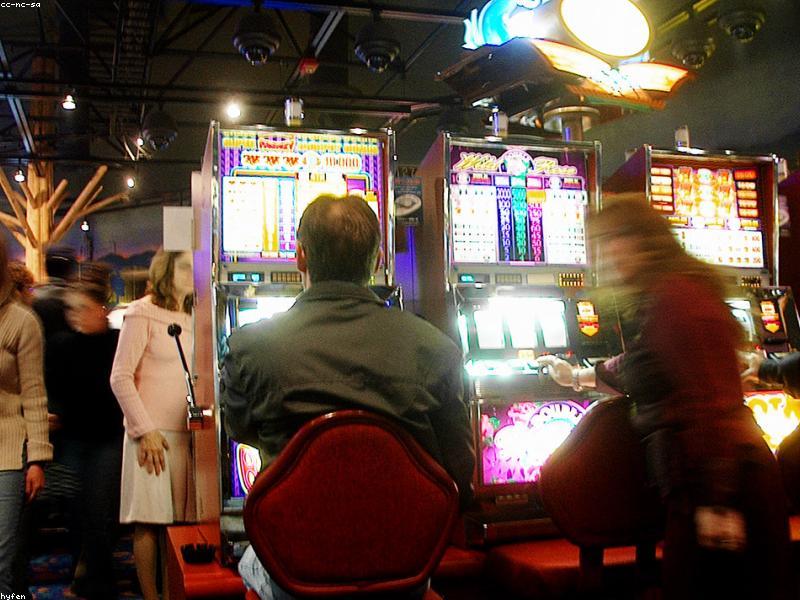
Slot Game Software Development: Mechanics and Mathematics

The Multi-Billion Dollar World of Digital Slot Games

Slot games are the backbone of both land-based and online casinos, accounting for 70-80% of casino revenue globally. The global online gambling market, projected to exceed $127 billion by 2027, is dominated by slot games in volume and revenue. Understanding slot game software development — from the mathematical foundations to the user experience — is essential for any company entering the real-money gaming or social casino space.

Modern digital slot games are sophisticated software products that must balance entertainment value, mathematical precision, regulatory compliance, and technical reliability. A slot game that pays out incorrectly (even by fractions of a percentage) can cost an operator millions. A slot game with poor UX fails to retain players. A slot game that fails regulatory certification never reaches market. Successful slot game development requires expertise across mathematics, software engineering, game design, and compliance — rarely found in a single generalist development team.

The Core Mathematics of Slot Games

Random Number Generation (RNG)

The foundation of every slot game is the Random Number Generator — the algorithm that determines outcomes. For regulated gaming, this is not truly random (no computer can generate true randomness) but rather a Pseudorandom Number Generator (PRNG) that produces sequences statistically indistinguishable from true randomness. Common PRNGs used in slot development include the Mersenne Twister and hardware-based RNGs for higher-security applications.

Gaming regulators require RNG certification from accredited testing laboratories (GLI, BMM, eCOGRA). The RNG must be seeded with unpredictable values (often hardware entropy), must produce sequences that pass statistical tests (Chi-squared, Kolmogorov-Smirnov), and must be resistant to prediction attacks. Implementing a properly certified RNG is not a DIY exercise — use a certified RNG library or module from a reputable provider and have it independently tested.

Return to Player (RTP) and Volatility

RTP (Return to Player) is the percentage of all wagered money that the slot pays back to players over a statistically significant number of spins. A slot with 96% RTP returns $96 for every $100 wagered on average. The casino's margin (house edge) is the complement — in this case, 4%. Most regulated markets require minimum RTP values (typically 85-96% depending on jurisdiction) and require that actual RTP be verified to match stated RTP within acceptable statistical variance.

Volatility (also called variance) describes the distribution of payouts. High-volatility slots pay infrequently but with larger amounts — more dramatic swings. Low-volatility slots pay more frequently but with smaller amounts — a more consistent but less exciting experience. Medium-volatility slots balance the two. The volatility is determined by the game's paytable and symbol distribution on the reels and directly impacts player engagement patterns.

Paytable Design and Mathematical Model

The paytable defines what each symbol combination pays. Designing a paytable that achieves the target RTP, target volatility, and hit frequency (how often any win occurs, typically 25-40% of spins) requires mathematical modeling. Game mathematicians use Excel models or specialized tools to simulate millions of spins and verify that paytable parameters achieve the desired metrics.

The reel strips (the arrangement of symbols on each virtual reel) determine symbol frequencies. A reel with 50 positions might have 5 high-value symbols, 10 medium-value symbols, and 35 low-value symbols, plus blank spaces. The combination of symbol frequencies across all reels, combined with the paytable, produces the mathematical profile of the game. This model must be validated before implementation and re-certified if changed.

Technical Architecture of Slot Game Software

Client-Side Game Engine

Modern slot games are built with HTML5/JavaScript for web and mobile delivery, using frameworks like PixiJS or Phaser for high-performance 2D rendering. The client handles all visual presentation: reel spinning animations, symbol reveals, win celebrations, bonus game sequences, and sound design integration. The client also manages user interface elements: bet size controls, autoplay settings, information screens, and paytable displays.

Performance optimization is critical for mobile — slot games are expected to run smoothly at 60fps on mid-range smartphones. Optimize texture atlases, use sprite-based animations rather than video where possible, and implement appropriate LOD (Level of Detail) for assets at different screen resolutions. WebGL-accelerated rendering via PixiJS is standard for production slot games targeting both web and mobile.

Server-Side Game Logic

In regulated real-money slot games, all game logic — RNG, outcome determination, and win calculation — must occur on the server, never on the client. Client-side game outcome determination is fundamentally insecure and rejected by all gaming regulators. The client sends a spin request to the server, the server generates the outcome using the certified RNG, calculates wins, updates the player balance, and returns the result to the client for animation.

This architecture requires a reliable, low-latency game server. Response times above 500ms noticeably impact player experience. Use WebSocket connections rather than HTTP requests for real-time communication. Implement redundancy and failover to ensure that a server failure during a spin does not result in player funds being lost or duplicated.

Bonus Features and Free Spins

Bonus features are the primary differentiator between slot games — they create memorable experiences and drive engagement. Common bonus mechanics include: Free Spins triggered by scatter symbols; Wild substitutions and expanding/sticky wilds; Bonus pick games (click to reveal prizes); Cascading/avalanche reels where winning symbols disappear and new ones fall; Multipliers that scale during free spin rounds; and Jackpot systems (local, network, or linked progressive jackpots). Each bonus feature must be mathematically modeled as part of the overall game model to ensure RTP targets are maintained across base game and bonus play.

Regulatory Compliance and Certification

Regulatory requirements vary significantly by jurisdiction. UK Gambling Commission (UKGC) requirements include strict RTP transparency, mandatory reality check features, prohibition of certain autoplay features, and enhanced responsible gambling tools. Malta Gaming Authority (MGA) requirements are similar. The Isle of Man and Gibraltar are popular licensing jurisdictions with robust but business-friendly frameworks.

Certification testing is conducted by accredited laboratories (GLI, BMM, eCOGRA, SIQ). These labs verify RNG certification, RTP accuracy, feature functionality, and platform compatibility. Testing takes 2-4 weeks for an initial submission and certification costs typically range from $5,000 to $15,000 per jurisdiction. Major markets (each EU country, UK, US states) may require separate certifications.

Responsible Gambling Features

Modern slot game development must include responsible gambling features. Deposit limits allow players to cap their maximum spend per day, week, or month. Session time limits with prominent reminders reduce problem gambling indicators. Reality checks display session duration and wins/losses at configurable intervals. Self-exclusion integration connects with national or platform-wide exclusion registries. Loss limits restrict maximum losses per session. These features are not optional in most regulated markets — they are required for licensing.

Social Casino vs. Real-Money Gaming

Social casino slots use virtual currency rather than real money — players cannot withdraw winnings. This avoids gambling regulations in most jurisdictions, enabling launch in markets where real-money gambling is restricted. Monetization is through in-app purchases of virtual currency. Social casino development has lower regulatory burden but must still implement age verification and responsible use features. Real-money slots require full regulatory compliance but offer significantly higher revenue potential.

Frequently Asked Questions

A standard slot game takes 3-6 months to develop from concept to submission. This includes mathematical modeling (2-4 weeks), game design and art production (6-10 weeks), software development (8-12 weeks), internal QA testing (2-4 weeks), and regulatory submission preparation. Certification testing by an accredited laboratory adds 2-6 weeks per jurisdiction. The total timeline from concept to certified, market-ready game is typically 6-9 months. Complex games with multiple bonus features, progressive jackpots, or multi-platform requirements take longer.
Budget ranges vary significantly by quality tier and scope. A basic 5-reel slot with standard bonus features developed by a competent offshore team runs $50,000-$150,000. A high-quality slot with professional art, engaging bonus mechanics, and comprehensive platform support runs $150,000-$400,000. AAA-quality slots from top-tier game studios with Hollywood-level production values and major licensed IP can exceed $1 million. Regulatory certification adds $5,000-$40,000 per jurisdiction depending on complexity. Ongoing costs include platform royalties (typically 15-20% of GGR), server infrastructure, and game maintenance.
Target RTP depends on your target market and operator relationships. Online casinos typically operate games in the 94-97% RTP range, with 96% being most common for web slots. Land-based casino slots often run 85-95% RTP due to higher overhead costs that operators need to recover. Markets like the UK (95%+ minimum for certain categories), Italy, and several US states have mandated minimum RTP requirements. For social casino (virtual currency) games, RTP principles still apply for player experience design, though regulatory minimums do not. Always verify current regulatory minimums for your target jurisdictions.
You can develop slot game software without a license — software development is not regulated. However, to operate and offer real-money slot games to players, either you or your operator client needs a gambling license in each jurisdiction where the game is offered. Most game developers license their games to licensed casino operators rather than operating themselves. Social casino games (virtual currency, no real-money withdrawal) generally do not require gambling licenses, though some jurisdictions are tightening regulations around social casino. Always consult local legal counsel before entering any real-money gaming market.
The standard technology stack for professional slot game development includes: Frontend/Client: HTML5, JavaScript, PixiJS (for rendering) or Phaser, GSAP (for animations), Web Audio API or Howler.js (for sound); Backend/Server: Node.js or Java for game server logic, Redis for session management, PostgreSQL or MySQL for transactional data; Integration: Seamless wallet API integration for operator platform compatibility; Mobile: PWA or wrapper apps (Cordova/Capacitor) for app store distribution; DevOps: Docker containers on cloud infrastructure (AWS/Azure) with multi-region deployment for low latency globally.
Nikhil - Founder of Gemora Tech

Nikhil

Founder & CEO @ Gemora Tech

Connect on LinkedIn

With extensive experience in enterprise software architecture, AI models, and immersive game development, Nikhil leads Gemora Tech in delivering scalable digital transformation solutions for clients worldwide.

Instant Project Scoping & Pricing

Looking to Build a Custom App or Hire Pre-Vetted Developers?

Get a line-item budget breakdown and engineering roadmap from Gemora Tech. Dedicated senior developers starting at $25–$45/hr ($3,200/month).

Message us on WhatsApp