
Multiplayer Game Development: An Exclusive Guide
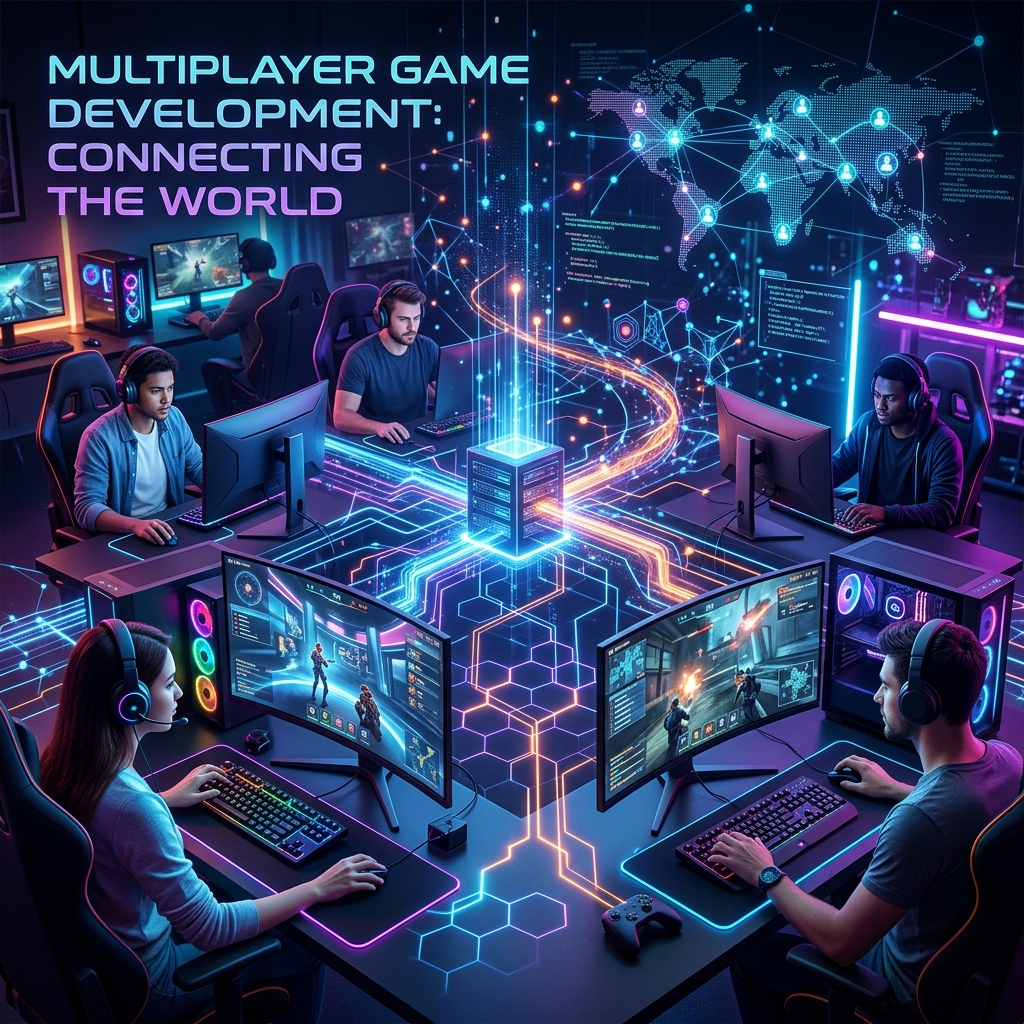
Introduction to Multiplayer Game Development
In the rapidly evolving world of gaming, multiplayer experiences have become the cornerstone of player engagement...

Building a multiplayer game is a monumental task that requires a deep understanding of network architecture, synchronization, and latency mitigation...
Understanding Network Topologies
Before writing a single line of code, you must decide on the network topology. The two most common architectures are Peer-to-Peer (P2P) and Client-Server...
- Peer-to-Peer (P2P): Players connect directly to each other. Cost-effective but prone to cheating and host migration issues.
- Client-Server: Authoritative servers handle game logic. Offers better security and consistency but requires robust infrastructure.
Latency and Interpolation
Dealing with latency is the biggest challenge in multiplayer development. Techniques like client-side prediction, entity interpolation, and lag compensation are essential.

Advanced Matchmaking Systems
Matchmaking isn't just about finding players; it's about finding the *right* players...
Anti-Cheat and Security
Maintaining competitive integrity is crucial. Implementing robust anti-cheat measures involves both client-side obfuscation and server-side validation.
Conclusion
Multiplayer game development is complex but incredibly rewarding. By understanding these core concepts, you can build engaging and scalable experiences.
Frequently Asked Questions
Nikhil
Founder & CEO @ Gemora Tech
With extensive experience in enterprise software architecture, AI models, and immersive game development, Nikhil leads Gemora Tech in delivering scalable digital transformation solutions for clients worldwide.